How Much Paint Do You Need for Exterior Painting Jobs?
One of the most common mistakes homeowners make before an exterior paint job is guessing on quantity. You almost always need more than you think because the estimate extends beyond your house's square footage.
The guessing game of how much paint you need almost always costs you more, either in wasted product or a mid-project run to the store to match a color that's no longer in stock.
Exterior paint calculation is more involved than it seems, but that doesn’t mean you need a math degree to figure it out. Our simple process will help you get a close estimate of how much paint you need to finish an exterior painting project.
Who Buys Paint for Exterior Painting Jobs?

Valley Creek Painters actually include the cost of paint in our free estimates. We help you choose the right color and purchase the paint. That means you don’t have to worry about calculations at all! Our team handles it.
But if you want to calculate how much paint you need for other projects, like painting a door, touching up the siding, or repainting window trim, these calculations will help you buy the right amount.
Why Getting the Quantity Right Matters
There’s a delicate balance to buying the right amount of paint for your project.
Buy too much, and you’ll waste paint and money. You’ll have to store the extra cans, risking dried-out paint, the next time you open them.
Buy too little, and you could risk project delays, an uneven finish, and mismatched dye lots when you go to buy more.
Professional painters calculate paint meticulously to avoid over- or under-buying, and homeowners should too.
Here is the formula we use to order the right amount of paint.
1. Start With Square Footage
Figuring out how much paint you need starts with an accurate square footage measurement of every paintable surface on the home.
Before you buy a single gallon, you need to know what you're actually covering.
Measure the perimeter of your home by walking around it and recording the length of each wall.
Add those numbers together.
Multiply that total by the height of your walls, from the base of the siding to the roofline.
This is your gross exterior wall square footage.
For a standard two-story home, square footage typically ranges from 1,500 to 2,500 square feet, depending on the footprint and ceiling height.
Don't forget the gable ends, or the triangular sections of wall that fill in beneath a peaked roofline. These get overlooked more often than you'd think, and on a home with steep or tall gables, they can add several hundred square feet to your total.
The formula for a triangle is simple:
Multiply the base width by the height of the peak.
Divide by two.
Measure each gable separately and add them to your running total.
Coverage rates matter, and knowing how many square feet a gallon of paint covers is the foundation of any accurate material estimate. The standard coverage rate for most exterior paints is 350 to 400 square feet per gallon under good conditions on a smooth surface. Divide your total square footage by 350 to get a conservative gallon estimate.
2. Subtract for Doors, Windows, and Non-Painted Surfaces
The next step is subtracting the surfaces that won't actually be painted. In most homes, that number is more significant than homeowners expect. Every door, window, and garage door is square footage that your exterior paint color doesn't need to cover.
The standard deductions most painters work from are a useful starting point:
A standard entry door runs approximately 20 square feet.
A typical window is around 15 square feet.
A garage door roughly 70 square feet
Count every opening on all four sides of the home, multiply by the appropriate deduction, and subtract that total from your gross square footage.
On a home with a dozen windows, two entry doors, and an attached two-car garage, that subtraction can easily reduce your estimate by 300 square feet or more, which is close to a full gallon at standard coverage rates.
Also consider any surfaces you won’t paint, such as:
A masonry chimney
Fiber cement panels
Decorative stone accents
These deductions are less standardized than those for windows and doors, so measure them directly and subtract their square footage from your total.
The goal at this stage is to get from gross square footage to net paintable square footage. This is the number your gallon estimate should actually be based on.
3. Factor in the Number of Coats
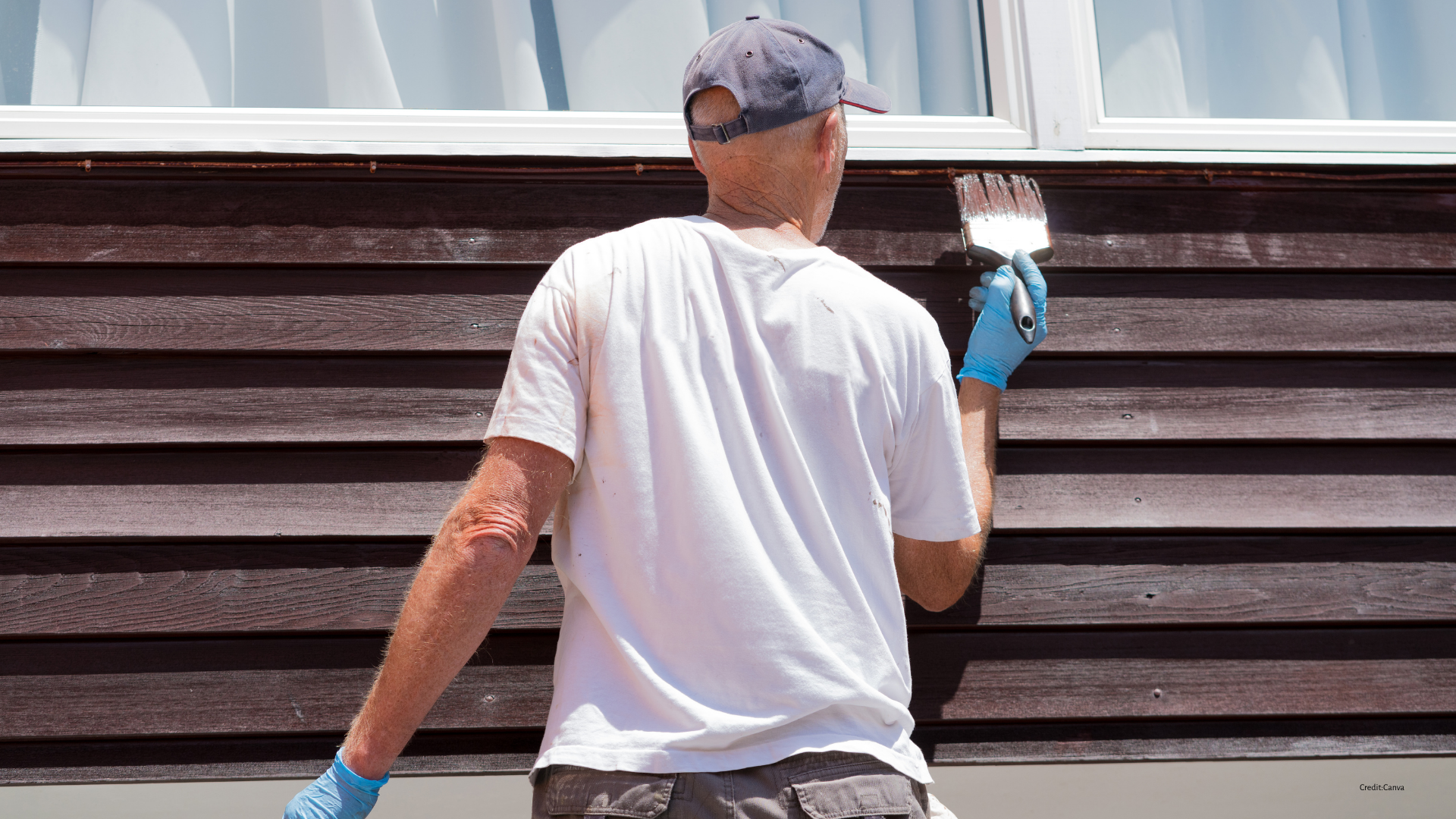
This is where many homeowners miss the mark. They forget that certain colors require more coats, and therefore, more paint.
Multiply your gallon estimate by the number of coats planned to get a more accurate picture of your total material needs.
If your new paint is a similar color to the existing one, one coat of a high-quality exterior paint will usually work fine.
Any significant color change almost always requires at least two coats, and sometimes three if the underlying color is strong enough to bleed through.
The safest approach is to assume two coats on any exterior repaint.
4. Trim, Doors, and Accent Colors
Trim, doors, shutters, soffits, and fascia are almost always painted a different color, which means they require a separate calculation.
It also requires a different type of paint. Trim paint is typically higher-gloss, harder, and more resistant to dirt and moisture that collect on horizontal surfaces. Using body paint on trim to save a trip to the store is a shortcut that won’t pay off.
For estimating trim paint quantity, a linear-footage approach is better than a square-footage approach.
Measure the total linear footage of all trim boards, fascia, corner boards, and window and door casings.
Estimate the average width.
Multiply those two numbers to get the approximate square footage.
Apply the same 350-400 square foot paint coverage rate.
This will give you a reliable estimate for trim paint. On a typical single-family home, trim and accent surfaces usually add 2-5 gallons to the overall project, depending on the amount of detail work the architecture entails.
5. Surface Texture and Porosity Change Everything
Square footage gets you to a baseline estimate, but it assumes a smooth, even surface that accepts paint at the rate listed on the can. In reality, coverage rates are calculated under ideal conditions, and most Minnesota homes don't offer ideal conditions across every surface.
Texture and porosity are the two variables that can quietly inflate your material needs beyond what the math initially suggested.
Rough or highly textured surfaces have significantly more actual surface area than their square footage implies. Every ridge, groove, and pit needs to be coated, and paint settles into those recesses rather than spreading across them the way it would on a flat wall.
Porosity is a separate issue. A surface that has been properly painted and sealed accepts a new coat differently than one that is bare, weathered, chalking, or freshly repaired. Porous surfaces absorb the first coat before it can build any film thickness, which means you're essentially priming with your finish coat and burning through product in the process.
If your surfaces are anything other than smooth and well-sealed, build that reality into your numbers before you buy.
Do You Need to Factor in the Primer Separately?
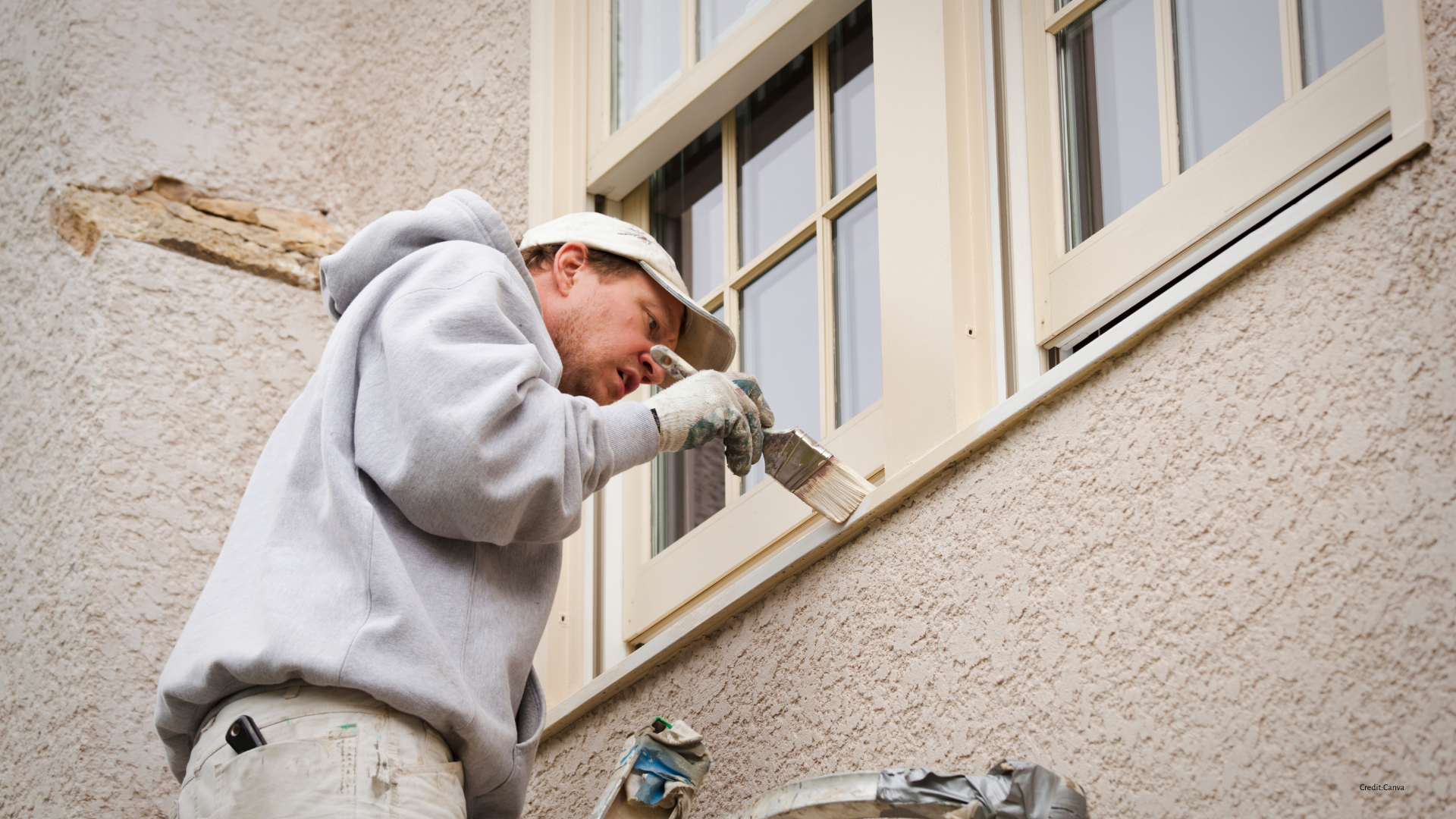
Primer is the part of the material estimate that homeowners most often skip because they assume the finish paint will handle it, or because they're trying to keep the budget tight. On most exterior jobs, especially on older homes, skipping primer shortens the life of the paint job.
Here are some situations that call for a primer on an exterior project:
New or bare wood
Repaired or patched sections
Drastic color changes
Weathered or chalking surfaces
Primer has its own coverage rate, and it isn't the same as finish paint. Most exterior primers cover 300 to 350 square feet per gallon under normal conditions, so they need their own line in the material estimate rather than being absorbed into the finish coat calculation.
Budget for primer where the job calls for it.
Paint Quality and Its Effect on How Much You Need
Not all exterior paints cover the same. Higher-quality paints have a higher solids content (more of what's in the can ends up on the wall rather than evaporating during application), which translates directly into better coverage per gallon and a more durable film once dry.
A premium exterior paint might cover 400 square feet per gallon, where a budget option covers 300. On a large home, there is the potential to add several additional gallons to achieve the same result. Factor in that lower-quality paint typically requires more coats to reach full opacity and even coverage, and what you thought you were saving can end up costing more overall.
When to Stop Calculating and Call a Professional
DIY estimation sometimes neglects hidden surfaces, complex rooflines, and multi-substrate homes. A professional estimate accounts for things a tape measure can't.
Getting the estimation right from the start saves money, prevents delays, and sets the job up for a finish that lasts.
We’ll come out to your home in the Twin Cities for a free estimate. When you work with professional painters, you know you’ll get the right paint quantity and the job will get done right the first time. Explore our exterior painting services in Minnesota and see some recent transformations.